
Finding the right car insurance can be a daunting task, especially when you’re on a budget. As an American driver, you’re likely looking for affordable auto insurance that doesn’t compromise on coverage.
With so many options available, it’s essential to understand what makes affordable car insurance tick.
Whether you’re a seasoned driver or just starting out, having the right insurance coverage can provide peace of mind and financial protection on the road.
Key Takeaways
- Understanding the factors that affect car insurance rates
- Tips for finding affordable auto insurance
- The importance of comparing insurance quotes
- How to balance coverage and cost
- Common mistakes to avoid when buying car insurance
The Basics of Car Insurance in America
Understanding the basics of car insurance is crucial for American drivers. Car insurance is not just a legal requirement in most states, but it also provides financial protection against physical damage or bodily injury resulting from traffic collisions and against liability that could arise from incidents in a vehicle.
State Minimum Requirements
Each state has its own minimum car insurance requirements. Typically, these requirements include liability coverage for bodily injury and property damage. For instance, drivers in California must have at least $15,000 in liability coverage for injury or death to one person, $30,000 for injury or death to multiple people, and $5,000 for damage to property.
Current Market Trends and Rates
The car insurance market is influenced by various factors, including economic conditions, driving habits, and regulatory changes.  Currently, many insurance companies are adopting usage-based insurance models, which can lead to more personalized premiums. As a result, drivers who exhibit safe driving habits may benefit from lower rates.
Essential Car Insurance Coverage Types
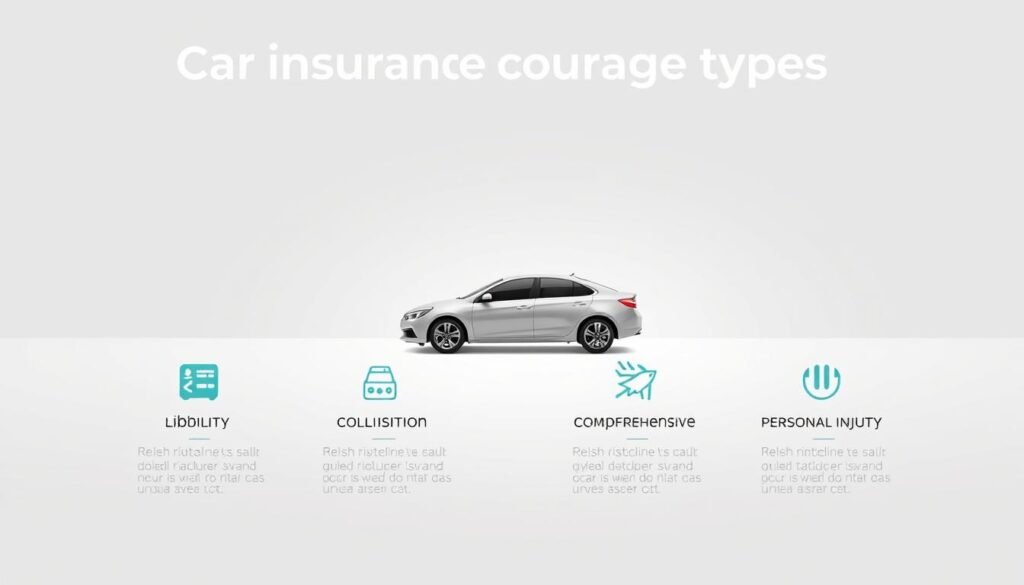
To ensure you’re adequately protected on the road, it’s essential to understand the various car insurance coverage types available. Car insurance is not just about meeting state minimum requirements; it’s about having the right protection in place for different scenarios.
Liability Coverage: Bodily Injury and Property Damage
Liability coverage is a fundamental component of car insurance, covering bodily injury and property damage to others in an accident. This coverage is typically mandated by state law and is crucial for protecting your assets.
Collision and Comprehensive Protection
Collision coverage pays for damages to your vehicle resulting from a collision, regardless of fault. Comprehensive protection covers damages not related to accidents, such as theft, vandalism, or natural disasters. Together, they provide a comprehensive safeguard for your vehicle.
Personal Injury Protection and Medical Payments
Personal Injury Protection (PIP) and Medical Payments coverage help pay for medical expenses for you and your passengers, regardless of fault. These coverages can be vital in covering costs associated with injuries from an accident.
Uninsured/Underinsured Motorist Coverage
Uninsured/Underinsured Motorist Coverage protects you if you’re involved in an accident with someone who doesn’t have insurance or doesn’t have enough insurance to cover the damages. This coverage can be a critical safeguard against financial loss.
Key Factors That Determine Your Car Insurance Rates
Understanding the factors that influence your car insurance rates can help you make informed decisions to potentially lower your premiums. Several elements contribute to the final cost of your insurance, and being aware of these can guide you in making positive changes.
Driving History and Violation Records
Your driving history plays a significant role in determining your insurance rates. A clean record with no accidents or violations typically results in lower premiums. Conversely, a history of claims or traffic infractions can increase your rates. Insurance companies view drivers with a history of incidents as higher risk, leading to higher costs.
Vehicle Make, Model, and Age
The make, model, and age of your vehicle also impact your insurance rates. Newer, more expensive, or high-performance vehicles are typically more costly to insure. In contrast, older models or vehicles with advanced safety features may qualify for lower rates. Insurance companies consider the cost of repairs, replacement parts, and the likelihood of theft when assessing your vehicle’s risk profile.
ZIP Code and Regional Risk Factors
Your ZIP code is another critical factor, as it reflects regional risk factors such as crime rates, traffic density, and weather-related risks. Areas with higher crime rates or more frequent natural disasters may have higher insurance premiums. Understanding how your location affects your rates can help you make informed decisions about your insurance.
Credit-Based Insurance Scores
Credit-based insurance scores are used by many insurers to evaluate the likelihood of a policyholder filing a claim. A higher credit score is generally associated with lower insurance claims, potentially leading to lower premiums. Maintaining a good credit score can be a valuable strategy for reducing your car insurance costs.
America’s Most Affordable Car Insurance Companies
American drivers have numerous options when it comes to affordable car insurance, with several top companies offering discounts and savings. These companies not only provide competitive rates but also offer unique features that cater to different driver needs.
GEICO: Discount Programs and Savings
GEICO is renowned for its discount programs that help drivers save on their car insurance. With a range of discounts available, including those for military personnel and students, GEICO makes it easy for drivers to lower their premiums.
Progressive: Name Your Price Tool
Progressive stands out with its Name Your Price tool, allowing customers to set their desired premium and adjust coverage options accordingly. This innovative feature gives drivers more control over their insurance costs.
State Farm: Drive Safe & Save Program
State Farm’s Drive Safe & Save program rewards safe driving habits with discounts. By using a telematics device or mobile app, drivers can demonstrate their safe driving practices and enjoy lower rates.
USAA: Military Member Benefits
USAA is dedicated to serving military members and their families, offering exclusive benefits on car insurance. These benefits include competitive rates and specialized coverage options tailored to military lifestyles.
Allstate: Drivewise and Milewise Options
Allstate offers Drivewise and Milewise programs, which provide usage-based insurance options. These programs allow drivers to save based on their driving habits and mileage, making insurance more affordable for low-mileage drivers.
By exploring these options, American drivers can find affordable car insurance that meets their needs and budget. Each company offers unique benefits, so comparing features and discounts is key to finding the best policy.
How to Find the Best Car Insurance Quotes
Navigating the complex world of car insurance quotes demands a thoughtful approach to find the best deals. With numerous insurance providers offering a wide range of coverage options, comparing quotes effectively is crucial to securing affordable car insurance.
Effective Online Comparison Strategies
Comparing car insurance quotes online has become increasingly convenient. Utilize online comparison tools that allow you to input your information once and receive multiple quotes from different insurers. This approach not only saves time but also helps identify the most competitive rates. When comparing quotes, ensure that the coverage levels and deductibles are consistent across the different insurers to make an accurate comparison.
Benefits of Independent Insurance Agents
Independent insurance agents can provide valuable assistance in finding the best car insurance quotes. They work with multiple insurance companies and can offer insights into the strengths and weaknesses of different policies. An independent agent can help tailor a policy to your specific needs, potentially saving you money and ensuring you have the right coverage.
Evaluating Coverage vs. Cost Trade-offs
When evaluating car insurance quotes, it’s essential to balance coverage and cost. While a cheaper policy might be tempting, it’s crucial to ensure that the coverage is adequate. Consider the potential risks and financial implications of being underinsured. Assessing your coverage needs and comparing them against the quotes you receive can help you make an informed decision.
By employing these strategies, you can effectively find the best car insurance quotes that meet your needs and budget. Whether you choose to compare quotes online or work with an independent agent, taking a thoughtful and informed approach is key to securing the right coverage.
10 Proven Ways to Lower Your Car Insurance Premium
Lowering your car insurance premium can be achieved through several effective strategies. By implementing these methods, you can significantly reduce your insurance costs without compromising on the coverage. Here are some actionable tips to help you save on your car insurance.
Policy Bundling Opportunities
One of the simplest ways to lower your car insurance premium is by bundling your policies. Many insurance companies offer discounts when you combine multiple policies, such as home and auto insurance, with them. This can lead to significant savings, often ranging from 5% to 20% off your premiums. Always check with your insurer to see if they offer bundling discounts.
Strategic Deductible Adjustments
Adjusting your deductible can also impact your premium costs. By opting for a higher deductible, you can lower your premium, but be aware that you’ll need to pay more out-of-pocket in case of a claim. It’s essential to strike a balance between a deductible you can afford and the premium you’re willing to pay. Consider your financial situation and driving history when making this decision.
Qualifying for Multiple Discounts
Insurance companies offer various discounts that can help lower your premium. These can include discounts for safe driving, being a good student, or having certain safety features in your vehicle. It’s crucial to inquire about all possible discounts you’re eligible for. Some insurers also offer loyalty discounts or discounts for members of certain organizations.
Credit Score Improvement Tactics
Your credit score can significantly affect your car insurance premium. Maintaining a good credit score by paying bills on time, reducing debt, and monitoring your credit report can help you qualify for lower premiums. Many insurers use credit-based insurance scores to determine premiums, so improving your credit score can lead to cost savings.
Defensive Driving Course Benefits
Taking a defensive driving course can not only improve your driving skills but also help reduce your insurance premium. Many insurance companies offer discounts to drivers who complete a defensive driving course, as it indicates a lower risk of being involved in an accident. Check with your insurer to see if they offer such discounts.
Car Insurance Discounts Every Driver Should Know
There are multiple car insurance discounts that every driver should be aware of to reduce their insurance costs. Insurance companies offer various discounts to attract and retain customers, and knowing these can help you save money.
Safe Driver and Accident-Free Rewards
Many insurance providers reward safe driving habits with discounts. Drivers with a clean record, free from accidents and traffic violations, can qualify for safe driver rewards, which can significantly lower their premiums.
Student and Good Grade Discounts
Students with good grades can benefit from student discounts. Insurance companies often view good academic performance as a sign of responsibility, offering discounts to students who maintain a certain GPA.
Vehicle Safety and Anti-Theft Features
Vehicles equipped with advanced safety features and anti-theft devices can qualify for additional discounts. Features such as lane departure warning systems, blind-spot detection, and anti-lock brakes can lead to lower insurance rates due to the reduced risk of accidents.
Loyalty and Multi-Vehicle Savings
Long-term customers can benefit from loyalty discounts, while insuring multiple vehicles under the same policy can result in multi-vehicle savings. These discounts reward customer loyalty and can lead to significant savings over time.
By taking advantage of these car insurance discounts, drivers can enjoy lower premiums without compromising on coverage.
Affordable Car Insurance Options for High-Risk Drivers
For drivers labeled as high-risk, finding affordable insurance requires a strategic approach. High-risk drivers, often those with a history of accidents, DUIs, or serious traffic violations, face significant challenges in securing car insurance at a reasonable cost.
Coverage After DUIs and Serious Violations
Drivers with DUIs or serious violations on their record should expect higher premiums. However, some insurance companies specialize in covering high-risk drivers. These insurers offer policies that, while more expensive than standard insurance, are often more affordable than going without coverage.
Understanding SR-22 Requirements
An SR-22 is a certificate of insurance that proves a driver has the minimum required insurance coverage in their state. Drivers with certain violations may be required to file an SR-22 to reinstate their driving privileges. Not all insurers offer SR-22 filings, so it’s crucial to find one that does.
Steps to Rebuild Your Driving Record
Rebuilding a driving record involves avoiding further infractions and, over time, having past violations removed from the record. Drivers can also take defensive driving courses to demonstrate a commitment to safe driving practices, potentially lowering their insurance premiums.
By understanding these options and taking proactive steps, high-risk drivers can work towards more affordable car insurance rates.
Tailored Car Insurance Solutions for Different Life Stages
Car insurance requirements evolve as people move through various life stages, necessitating tailored solutions. As individuals grow and their circumstances change, their car insurance needs shift accordingly.
Teen and New Driver Coverage Strategies
For teen drivers, car insurance can be particularly expensive. However, strategies such as adding them to a parent’s policy or taking advantage of good student discounts can help mitigate costs. It’s also beneficial to consider usage-based insurance that tracks safe driving habits.
Family and Multi-Driver Policies
Family policies that cover multiple drivers can be cost-effective. Insurers often offer discounts for multi-vehicle households. It’s essential to review coverage levels and adjust deductibles to balance premium costs and potential out-of-pocket expenses.
Senior Driver Discounts and Programs
Senior drivers can benefit from various discounts and programs. Many insurers offer mature driver discounts, and some provide defensive driving courses that can lower premiums. It’s also a good time to reassess coverage needs as driving habits change.
Insurance Adjustments During Life Transitions
Life transitions, such as moving, getting married, or having children, can impact car insurance needs. It’s crucial to notify insurers of these changes, as they may affect policy rates or coverage requirements. Regularly reviewing and adjusting policies during these transitions ensures adequate protection.
Navigating the Car Insurance Claims Process
Filing a car insurance claim can be a daunting task, but understanding the process can make it more manageable. When you’re involved in an accident or your vehicle is damaged, knowing the steps to take can help you get back on the road quickly.
The process begins with filing a claim, which should be done as soon as possible after the incident. It’s essential to have all the necessary information ready, including the policy number, details of the incident, and any relevant documentation such as police reports or witness statements.
Step-by-Step Claim Filing Guide
To file a claim, start by contacting your insurance provider via phone, online portal, or mobile app. Be prepared to provide detailed information about the incident, including the date, time, location, and a description of what happened. You’ll also need to provide your policy number and any relevant documentation.
Claim Assessment and Settlement Timeline
After filing a claim, your insurance company will assess the damage and determine the settlement amount. This process typically involves an adjuster inspecting the vehicle or reviewing the damage reports. The settlement timeline can vary depending on the complexity of the claim, but most insurance companies aim to resolve claims within a few weeks.
How Claims Impact Future Premium Costs
Filing a claim can potentially impact your future premium costs. Insurance companies often view claims as an indicator of increased risk, which may lead to higher premiums at renewal time. However, the impact depends on the nature of the claim and your overall driving history.
Understanding the car insurance claims process can help you navigate it more effectively and minimize potential impacts on your premiums.
The Evolving Future of Car Insurance Technology
Technological innovations are changing the way car insurance is perceived and utilized. The industry is witnessing significant advancements in various areas, transforming the landscape of car insurance.
The integration of technology in car insurance has led to more personalized and efficient services. Some key developments include:
- Advanced data analytics for risk assessment
- Increased use of artificial intelligence for claims processing
- Emergence of usage-based insurance models
Usage-Based Insurance and Telematics
Usage-based insurance (UBI) and telematics are revolutionizing the way insurers assess risk. By leveraging data from vehicles, insurers can offer more accurate premiums based on actual driving habits. Telematics devices track driving behavior, such as speed, braking, and acceleration, providing insurers with valuable insights.
Autonomous Vehicles and Coverage Changes
The rise of autonomous vehicles is expected to significantly impact car insurance. As vehicles become more autonomous, the liability may shift from drivers to manufacturers, necessitating changes in coverage policies.
Digital Insurance Platforms and Services
Digital insurance platforms are enhancing customer experience by offering streamlined services, including online quotes, policy management, and claims filing.
Conclusion
Finding the right car insurance can be a daunting task, but understanding your options is key to securing affordable coverage. Throughout this article, we’ve explored the essential aspects of car insurance in America, from state minimum requirements to the various coverage types available.
A car insurance summary reveals that factors such as driving history, vehicle make, and ZIP code significantly impact insurance rates. Companies like GEICO, Progressive, and State Farm offer competitive rates and discounts that can lead to affordable coverage. By leveraging policy bundling, deductible adjustments, and available discounts, drivers can lower their premiums.
As the car insurance landscape continues to evolve with technology, usage-based insurance and digital platforms are becoming increasingly prevalent. Staying informed about these developments can help drivers make the most of their insurance investments.
Ultimately, securing the right car insurance requires a balance between coverage and cost. By understanding the factors that influence rates and exploring available options, American drivers can find affordable coverage that meets their needs.